

Handheld laser welding up to 8.5 mm
Pulsed vs continuous-wave laser cleaningLess heat.
More control.
Why THEO builds the TM-300 around MOPA pulsed laser technology, and not around a continuous-wave laser.
Continuous-wave
What constant heat does to the metal
Some laser cleaners use continuous-wave technology. Constant heat input on the surface tends to melt the base material during cleaning, even when the contamination is fully removed. And even though the result can look optically clean, the metal underneath has already changed.
Pulsed MOPA
Short pulses, then time to cool
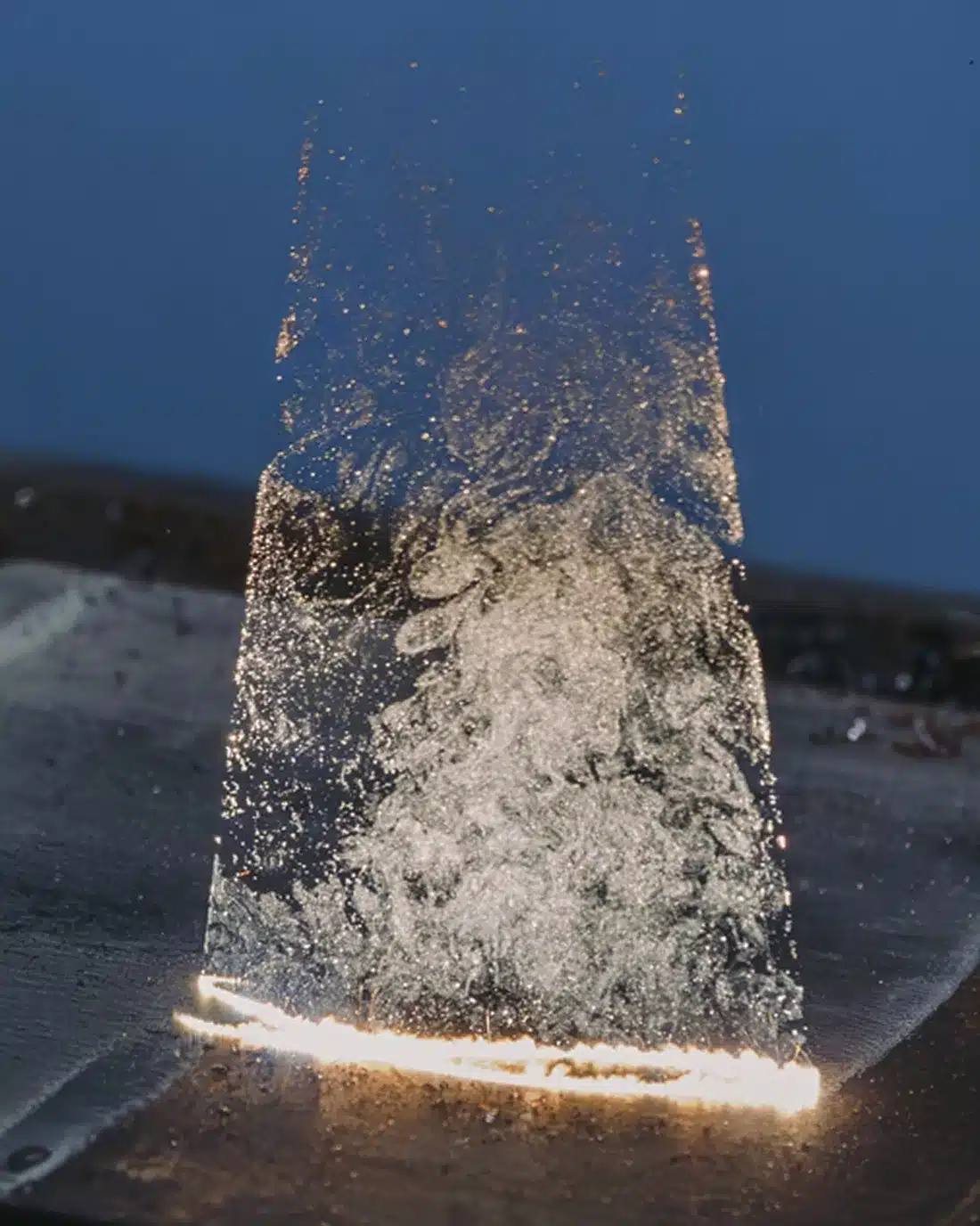
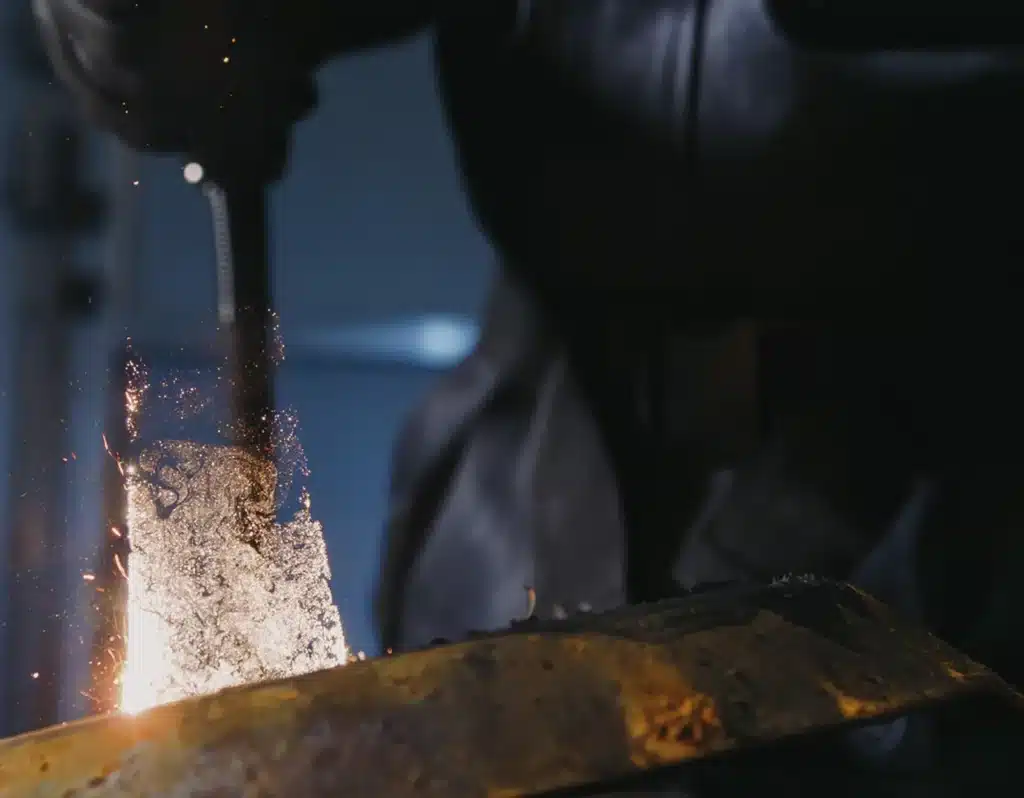
The TM-300 uses MOPA pulsed laser technology instead. MOPA delivers short, controlled bursts of energy, the critical factor in cleaning without damage.
The short pulses hit the contamination hard, then give the material time to cool before the next pulse lands. That’s what limits heat spread into the base material, and damage to it stays minimal.
MOPA is the way to go if you want contamination gone and your base material untouched. THEO uses MOPA because controlled cleaning needs controlled energy.
Side by side
Continuous-wave vs pulsed MOPA
| Continuous-wave laser | Pulsed MOPA laser (TM-300) | |
|---|---|---|
| Energy delivery | Constant heat input on the surface | Short, controlled bursts of energy |
| Between pulses | No pause: the surface keeps taking heat | The material has time to cool before the next pulse lands |
| Effect on the base material | Tends to melt the base material during cleaning, even when the contamination is fully removed | Heat spread into the base material is limited; damage to it stays minimal |
| The result | Can look optically clean while the metal underneath has already changed | Contamination gone, base material untouched |
| Control | Power, spot size and scan speed; heat input is managed mainly by how fast the beam moves | Pulse width 10–500 ns and pulse frequency up to 8,000 kHz to fine tune cleaning power |
TM-300
The pulse, in numbers
Both versions are pulsed. The Gaussian and the Flat-top differ in how much energy one pulse carries.
A fair comparison
Where continuous-wave still fits
A continuous-wave laser is not the wrong tool. It is a different one. It delivers high average power without interruption and costs less per watt. That makes it a reasonable choice for large, robust steel structures and pipes with thick rust or old paint: parts heavy enough to carry the heat away, where a change in the surface does not matter.
On thin sheet, molds, polished or heat-sensitive parts, and anywhere the surface has to survive the cleaning, the heat is the problem. That is the work the TM-300 is built for.
Rule of thumb. If the part can take the heat and area per hour is all that counts, look at continuous-wave. If the base material has to stay as it is, use a pulsed laser.
What a published test found
In a comparison published by Laser Focus World (February 2021), a MOPA pulsed fiber laser and a continuous-wave fiber laser removed paint from aluminum alloy and carbon steel at the same average power. The pulsed laser left less damage to the base material and a smoother surface: roughness after continuous-wave cleaning was 1.5 times the original surface, after pulsed cleaning it was close to or below the original. These are third-party lasers, not the TM-300. Source: Laser Focus World
See the TM-300 at work
Request an online demo with the THEO Applications lab, see it at a THEO Partner near you, or ask for a quote.
